

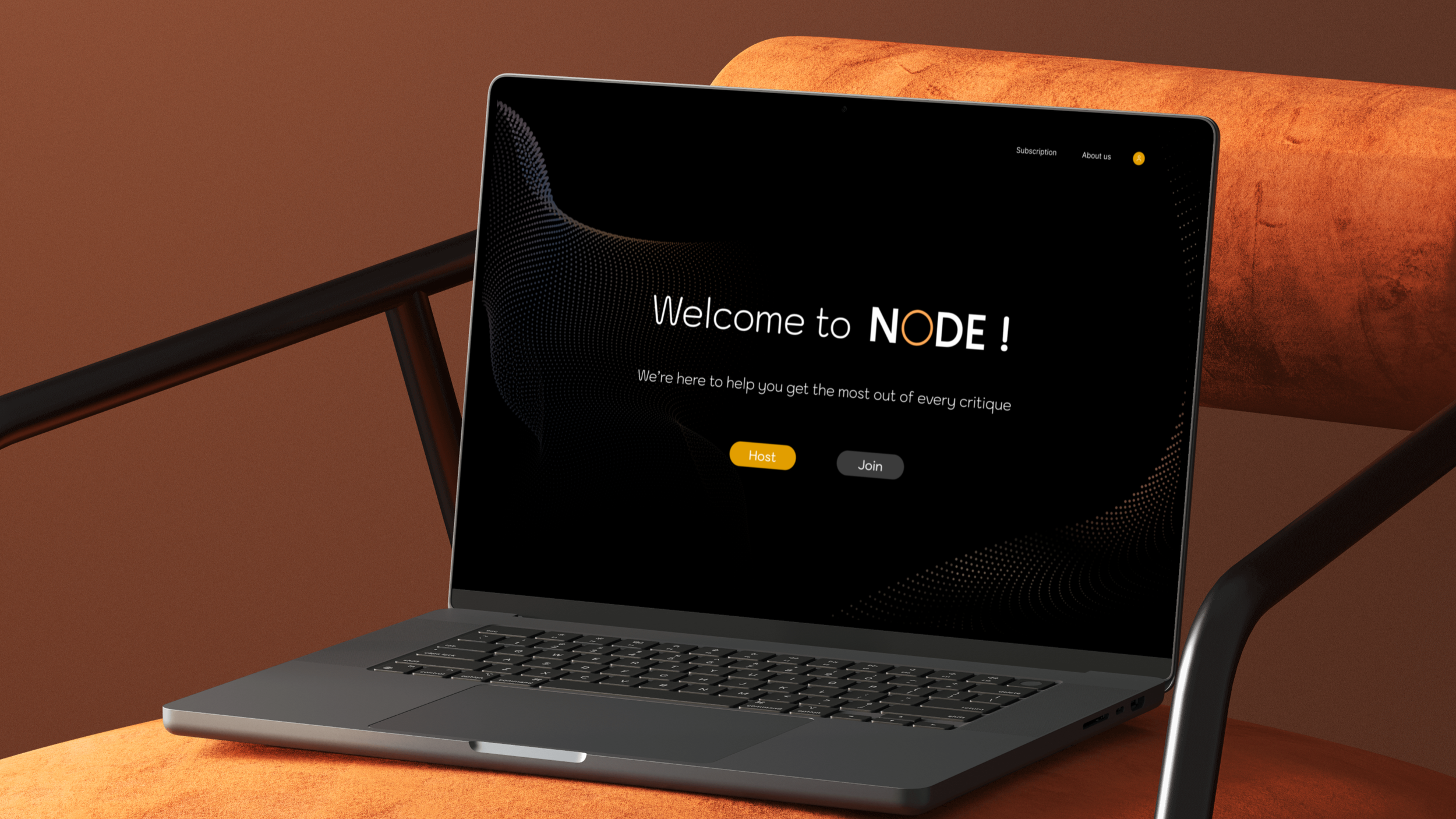
Type
UI / UX , System Design
Duration
Nov 2026
Tools
Figma, Webgazer, GPT-5
Overview
A group project reconstructing the conventional present and feedback critique into a system that increases audience participation and provides more actionable feedback for presenters.
Survey
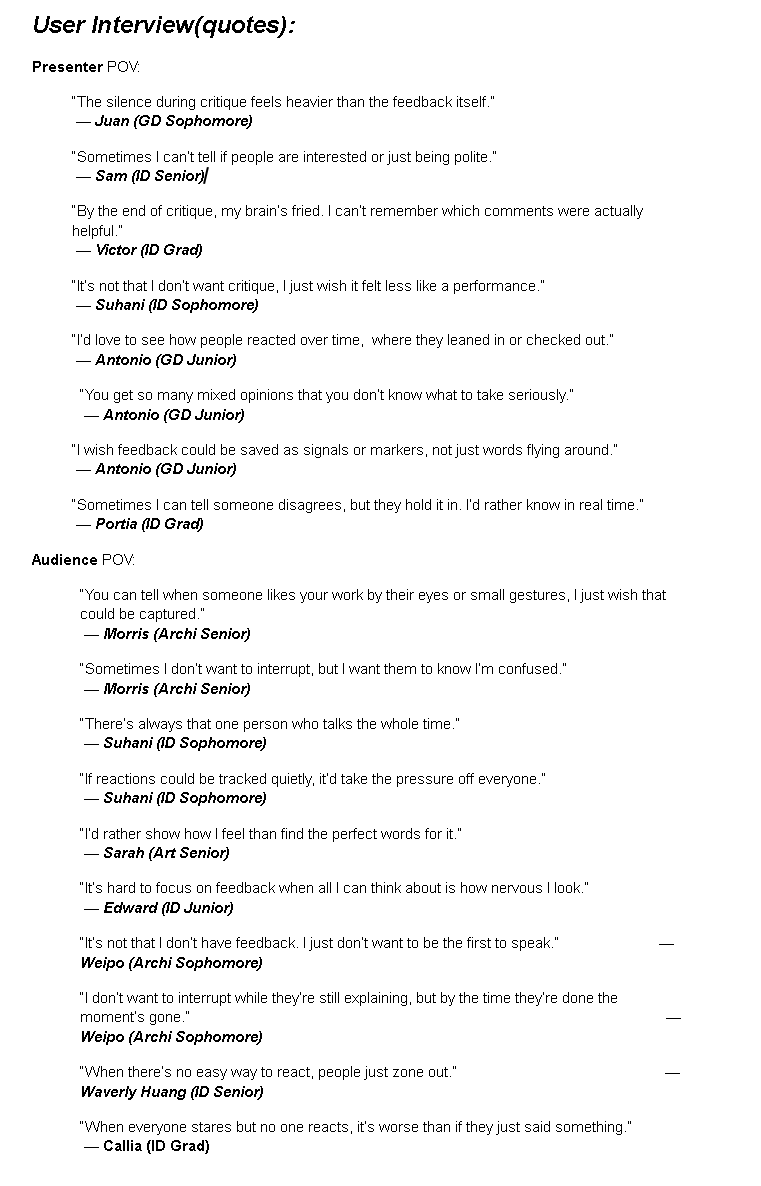
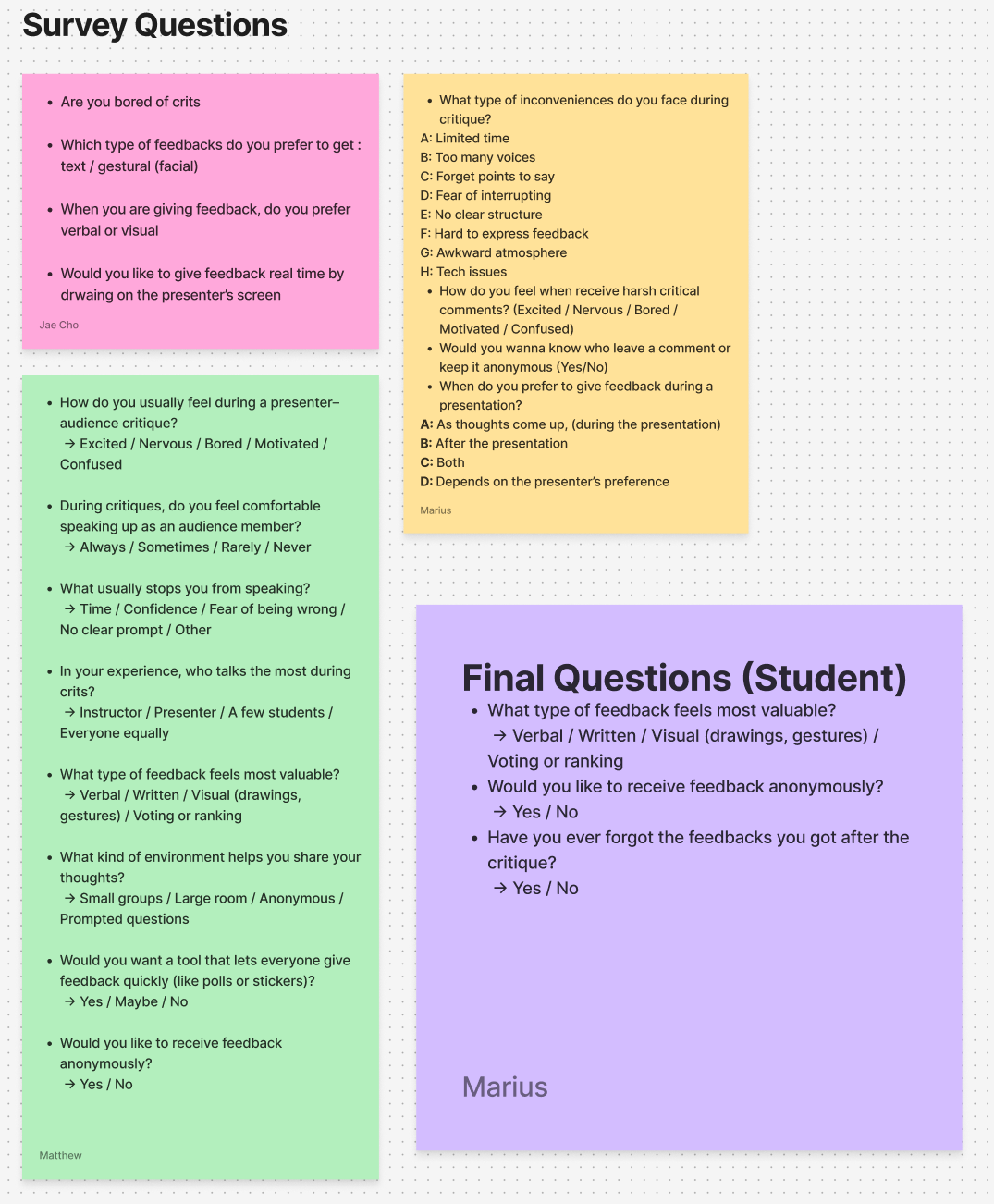
Survey was conducted to identify the current problems and pain points RISD students experience during conventional present and feedback critiques.
Pain Points
Presenter
Only get feedback from a certain audience
Cannot know a general opinion of all audience
Doesn’t have a organized review of feedback
Audience
People drift from the flow of the presentation while note taking
People hold back expressing opinions out loud because of the hierarchy or emotional pressure
People are busy thinking feedback to give, which weakens the potential discussion to be unfolded as a group
Draft solution
Capturing ideas quickly through gestures during presentations.
Allowing time for the audience to absorb and recall the presentation before feedback stage.
Enabling anonymous expression to reduce hierarchy and pressure while collecting broader opinions.
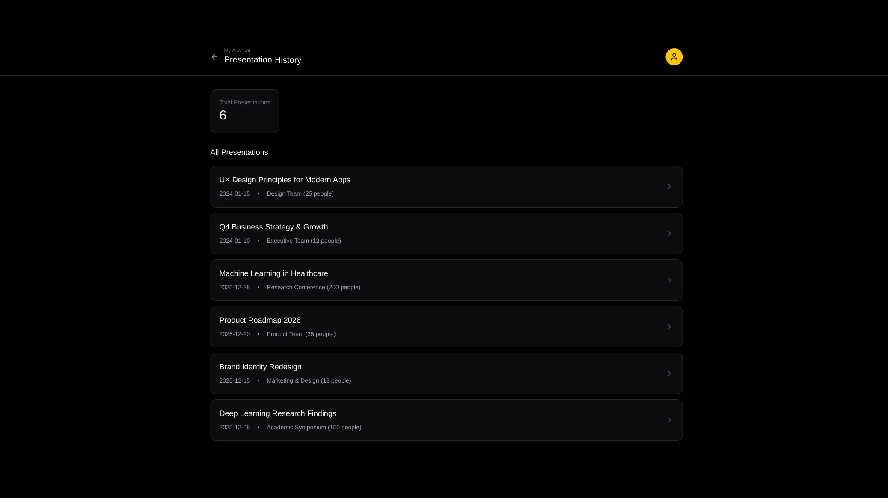
Organizing and archiving critique content for presenters to review later.
“What do you mean by gestures?”
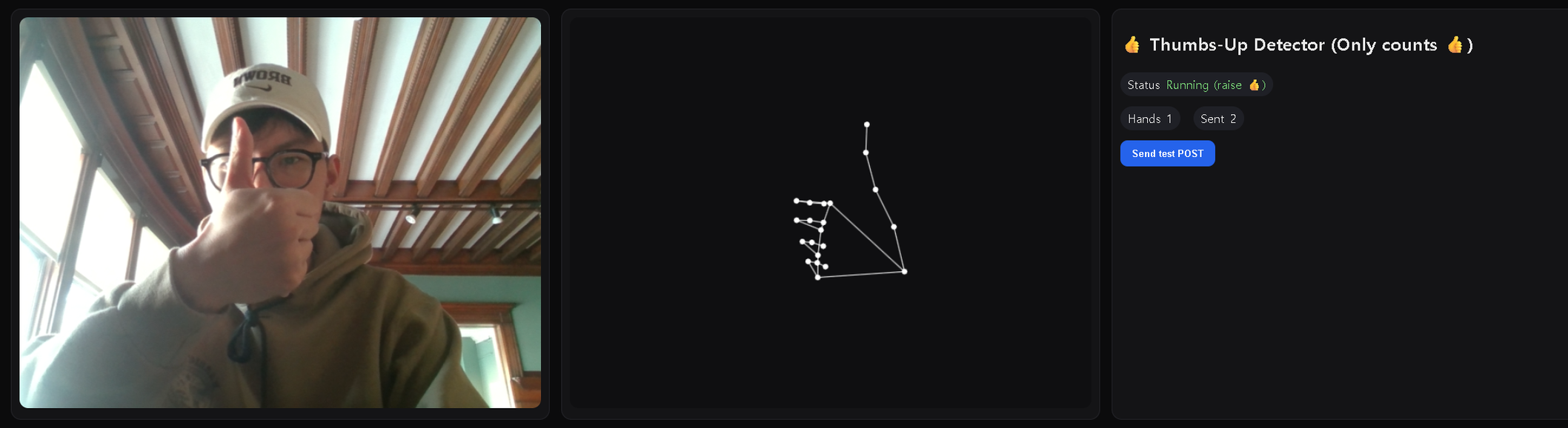
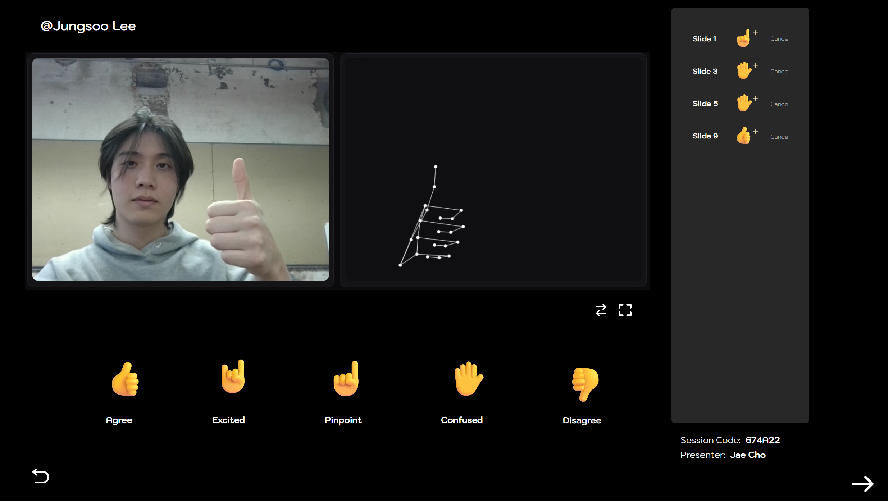
Using motion reading technology, MediaPipe, audience members can input rapid gestures during presentations with their device. These gesture pinpoints can be reviewed after the presentation to recall and refine the ideas. This allows them to recall specific slides they reacted to while maintaining focus on the overall flow of the presentation.
“But do gestures really work better than buttons or just quick note taking?”

According to a 2021 academic journal article by Lee and Yoon titled User Interface for In Vehicle Systems with On Wheel Finger Spreading Gestures and Head Up Displays,
gesture based input allows users to maintain primary task focus more effectively than touch based input, showing approximately 20 percent faster response times in dual task tests.
Although the study was conducted in a driving context, its findings are relevant to this project. In a critique setting, the audience’s primary task is to focus on the presentation, while idea annotation functions as a secondary task.
Final Idea
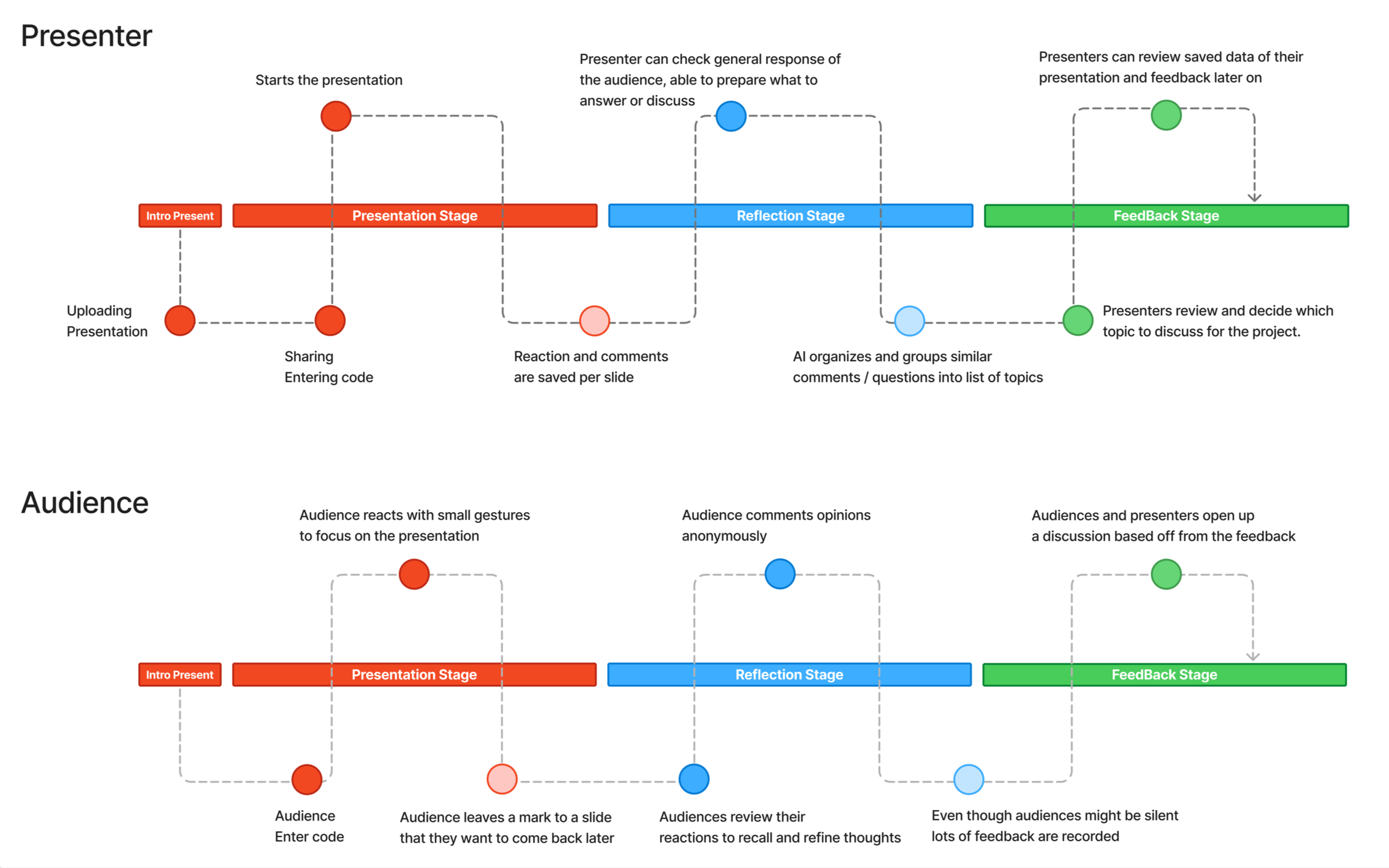
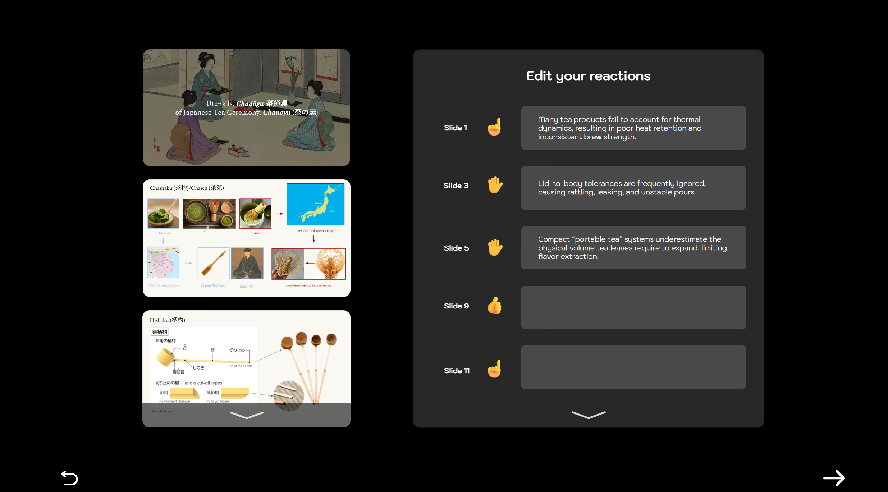
Building on the conventional present and feedback critique format, this system introduces an additional stage called reflection.
This website platform supports the entire critique process, from the presentation to the final feedback stage, ensuring that critique content is recorded and preserved for presenters to revisit in the future.
The anonymous nature of the website platform allows audiences to express initial reactions freely, lowering social pressure and hierarchy. At the same time, it preserves the importance of verbal discussion by using these anonymous inputs to spark verbal debate, encouraging participants to articulate, expand, and challenge ideas collectively during group feedback.
Presenter UI - Reflection Stage
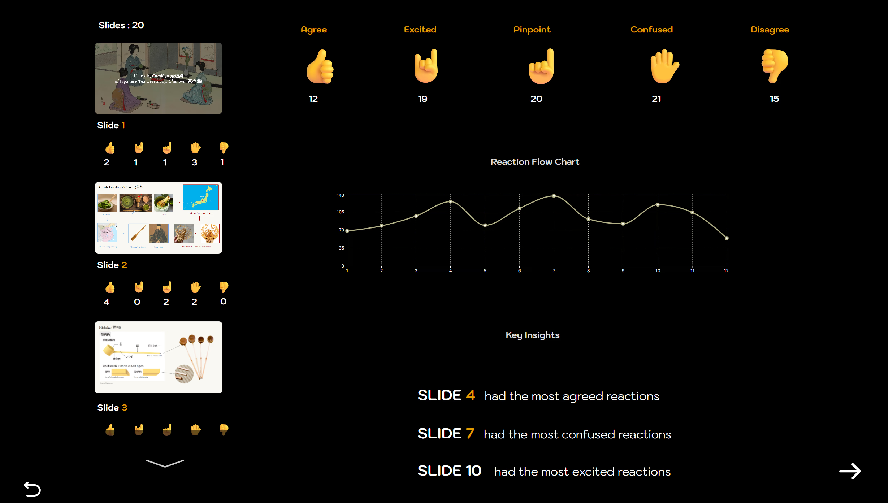
Presenter UI - Archived Critique
Audience UI - Presentation Stage
Audience UI - Reflection Stage
Implications


Although this project was developed through user research focused on in person critique environments, the system shows strong potential for remote settings. The use of a webcam as a gesture input device aligns naturally with remote meetings, where webcams are already a standard requirement and can also support anonymous input.
If published, the system could be integrated as a plugin for platforms such as Zoom, extending its critique workflow into remote meetings while preserving audience participation and actionable feedback.